
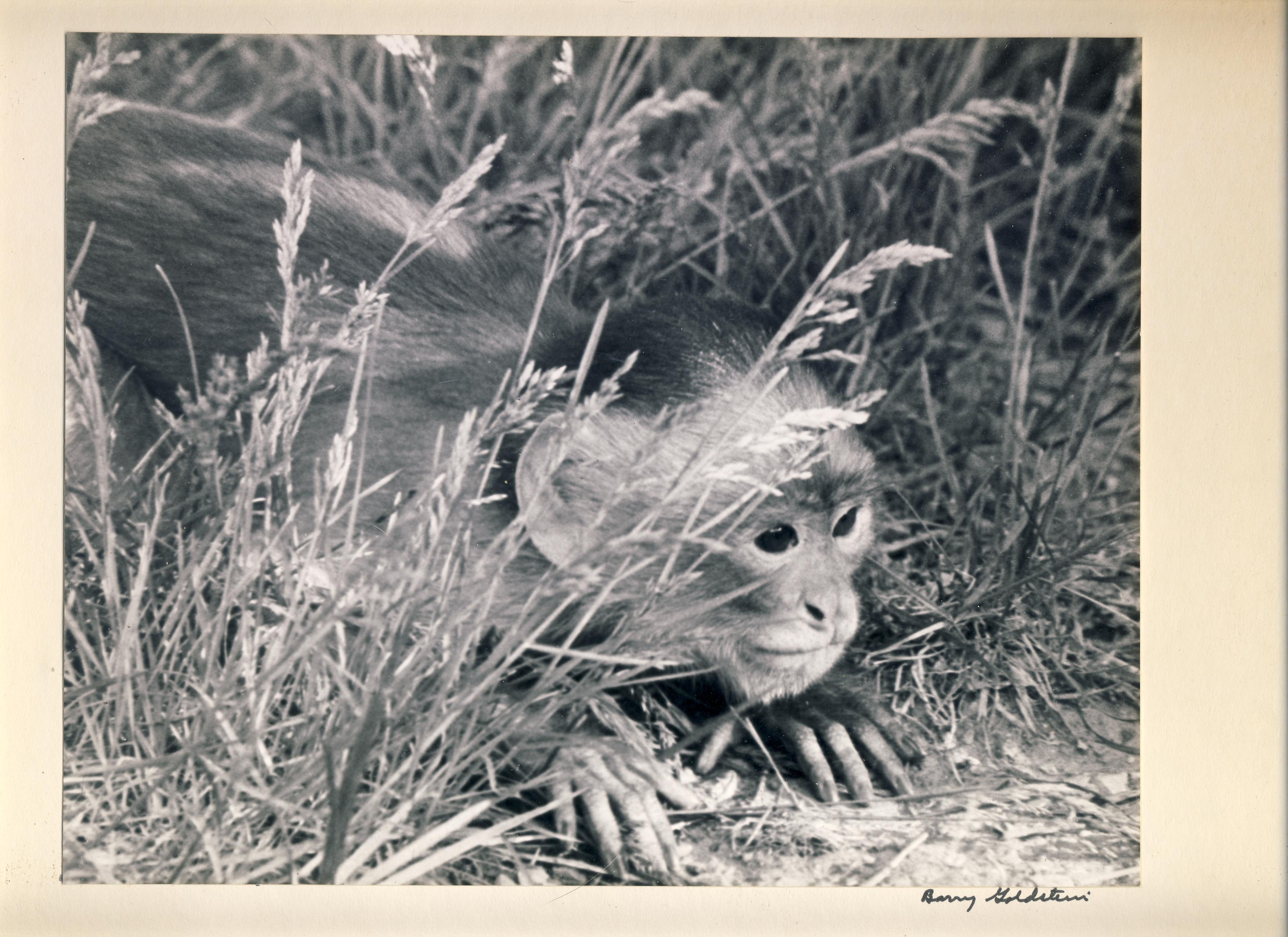
 Today I can ask myself that question: why was I so intrigued by monkeys when I was growing up? I dreamed of having a chimpanzee living with me. I thought about how I would take care of him; I wondered was this the brother I always wanted but never had? When I found out at age twelve that we were moving from the States to Rio de Janeiro, Brazil, my thoughts about monkeys became more prevalent. I knew there were monkeys in the jungles and imagined visiting them. Rio was a large modern city and we lived in Ipanema, near the beach in an apartment building that didn’t look at all like a jungle dwelling. This was the Rio before huge shiny glass shopping malls, just small stores and a weekly “feira” or market where we bought our fruits and vegetables and many other household items which I paid no attention to. My mother had reassured me when I asked her how I ‘d ever learn how to cook and do other kitchen chores:” you will have plenty of time in your life to do that. Right now you don’t have to.”
This was true, full time live in help was about twenty dollars a month so we had a maid, a cook, and a laundry woman working for us. I began to talk a lot about monkeys after we were settled in our apartment. Returning from the feira one day my mother proudly handed me a small Marmoset monkey with a white beard and white ear tufts. “Here’s your monkey,” she said giving him to me. I glanced at him, disappointed at his size but happy nonetheless to begin my primate adventures. I named him Mickey after the famous mouse and I took him everywhere I could. Walking to the beach, sitting on our small veranda and running around my room he and I bonded. I studied his brown eyes for responses to mine, listened to his chatter when he ate a fruit he liked.
Sometimes the maid would feed him bugs and I later learned this is what killed him because they were full of chemicals the exterminator sprayed. There were no screens on the windows and large crickets and other flying insects plagued my sleep at night. Once I awoke screaming as a large brown insect thudded against the walls of my room. The maid rushed in waving a kitchen knife and cut the cricket in two. Huddling beneath my covers I contemplated being calmly asleep at my grandparent’s apartment in Buffalo, New York last year and wondered why I was now living here.
After Mickey’s demise I put him in a shoe box and wrote: “Here’s Mickey, God,” on it in crayon. We buried him in the nearby Gavea hills. I asked for a Wooly monkey and my mother demurred saying it was too big and too wild. “We won’t be able to control that monkey if he gets angry.” She then bought me a Capuchin monkey. This breed is called the organ grinder’s monkey or known as “Curious George” in children’s books. Finally a real monkey I thought and named her Lucy. She sat on my shoulder, eating and chattering and jumped around our apartment. My father nicknamed her “Loosey” spelled l o o s e y because she left souvenirs from eating so much fruit. I didn’t care that my friends and my boyfriend never really liked her. She however had her own opinions about people. One day escaping from her cage, she took a lipstick from the maid’s dresser top and scribbled all over her mirror. I thought this was hilarious and very smart but no one else did.
Leaving Rio to go to college, I gave Lucy to the daughter of the family who moved into our apartment. I was saying goodbye to the warm beaches, my first love and my monkey to go to Ann Arbor at seventeen for college. To become an American as my father said I had to do. My parents were moving to Geneva where the European headquarters were located for his continued work in immigration. I was heartbroken knowing my home was now going to be Switzerland, a cold country I did not know. After I was settled in my dorm, I received a letter from the family in Rio telling me they could not keep Lucy and took her to a sanctuary for monkeys. A follow up letter told me she had been attacked by the other monkeys and died. That night I cried silently into the pillow on my bunk bed.
No more monkeys for me I thought. Four years later I eloped to marry my first husband and we moved that summer to his parent’s Long Island home. My mother came to join us, meet him and plan our rabbinical family wedding in June in Buffalo. She told him stories about Lucy and he told her he’d also like to have a monkey. She promptly went out to buy him a Capuchin monkey at a nearby large chain store. He named our new pet, Yonkel and we let him roam around the yard causing quite a stir in that Long Island neighborhood. We went to stay with my aunt in Buffalo for our “real” wedding bringing Yonkel. My aunt told me she had her guest bedroom repainted after we left. It seems no one would stay there after Yonkel had.
On to Ann Arbor where I was finishing my degree and we decided to purchase another monkey, a male, planning to breed them for fun. But we soon discovered we had two females, the genitalia look the same. We didn’t know Yonkel was a female nor did the store who sold him/her to us. The two female monkeys got along most of the time but did squabble over treats and our attention. Yenta, as the new arrival was named, was larger and much wilder having recently left the jungle. She could sail twenty feet across a room through the air landing smoothly on a wall. She quickly learned how to open the refrigerator door balancing her feet against it and pulling the handle back. Escaping the cage was easy for her, I remember coming home from class to find her sitting on the kitchen table next to a bowl of onions eating one and weeping, refusing to let me take them away.
My sister tells me she remembers having dinner there with other guests while the monkeys hopped around taking food from our plates. I think I blotted that memory out. We planned a trip to Europe to visit my parents and brought the monkeys to his family on Long Island to be monkey sat in their basement. Returning, my mother-in-law said: “Never again, they were awful. They kept unscrewing the light bulb in the ceiling and smashing it on the floor. When they escaped the basement, I had to find a girl with long dark hair like yours, “she said pointing at me,” so they would jump onto her head and we could finally grab them. You can bring me a grandchild anytime, but no more monkeys!”
After Ann Arbor we moved to Cambridge and since Harvard Housing for married couples didn’t allow monkeys, we rented a very rundown apartment in Porter Square. There they occupied a large cage and swung from rope to rope inside of it. Occasionally we took them to the Arnold Arboretum and watched as people exclaimed:”did I really see a monkey in that tree?” Laughing we would collect them and go home. When the mice ran around our bedroom so often that I couldn’t stand it, we moved again. At our new rental, we added a husky puppy to our menagerie. She learned to love grapes, being pelted with them daily from their cage and to enjoy monkeys riding on her back.
Yenta matured and decided my husband was hers, attacking me viciously one day when I was hugging him, sinking her teeth into my arm and scratching me. We contacted the local Simian society where members showed up at meetings with monkeys in baby carriages, diapers and clothes. They weren’t like us we realized but they were helpful in finding a monkey refuge. We headed to Logan Airport to fly Yenta there and setting her travel cage on the counter, I watched horrified as she pulled the agent’s blue jacket from his chair into her cage. She loved its gold buttons and pulled at them trying to chew them off. We said goodbye and patted her while they reluctantly agreed to take her on board.
Soon after I learned that I was expecting our first child and that we were moving to California. Now we had to find a home for Yonkel, putting her in a sanctuary too. In California I read a book called: “Babies are Human Beings,” and realized I needed to understand more about human development, not just apes. Children became my monkeys after that, even though I still pined sometimes for a chimpanzee. I parented four children whose antics kept me going for many years. I watched them become adults and now happily observe my grandchildren as they grow up.
Monkeys taught me many things during the three years we had them. I watched them love, groom and support each other; I saw how they gave and took from us and from one another. I was fascinated by their open expressions, their happy chirps and loud fury, their ability to acquire what they needed to survive physically and emotionally. They helped me understand how human beings could and often did relate; although we are more subtle and more devious as we plan our life adventures. Monkeys are much more direct about what they desire, perhaps that is the real lesson I learned from them. It certainly is one I know I still have trouble doing and need to practice. I envy their ability to seek and fulfill their basic wants, whether it is sustenance, shelter, fun or love, they know how to demand it vociferously and to make it happen.
Thinking and believing that we have evolved from them, I wonder if we gave up too much of that honesty, too much of that openness as we became more complex beings. We began to play more games with each other, to lie, to deceive, to make up reasons, to hide our real feelings, to mask what we want and need from each other. A simple grunt of appreciation, a taking of what we want, a scream of joy or a growl of anger might make us all happier and more satisfied!
 Humorous Humans